


Forehead creases, flat cheeks, thinning lips and the grooves that run from your nose to your mouth all get filed under aging. They don't share a cause, though, and that is why the Botox or fillers question has no single winner.
Botox relaxes the muscles that fold your skin every time you frown, squint or raise your brows. Fillers replace volume your face has lost over the years. The right choice depends on what is causing the concern, and a treatment aimed at the wrong cause won't change much.
Below, common facial concerns are paired with the treatments usually considered for them, along with what results, upkeep and safety look like. If you already know which area bothers you most, a consultation with a licensed injector is the quickest way to learn whether you are a candidate and what a plan for your face would involve.
How Botox and Fillers Work
Both are injectables, both take under an hour, and both need little or no downtime. That is roughly where the overlap ends. One works on muscle and the other works on volume.
Botox
Botox is a purified form of botulinum toxin type A. Injected in tiny doses, it blocks the nerve signal that tells a muscle to contract. The muscle relaxes, and the skin above it stops folding into the same line thousands of times a day.
The FDA has approved Botox Cosmetic for forehead lines, frown lines between the brows, crow's feet and vertical neck bands. Injectors also use it off-label for things like a subtle lip flip or a slimmer jawline.
Dermal Fillers
Most dermal fillers are made of hyaluronic acid, a sugar molecule your skin already produces. The gel goes under the skin to lift what has sunk, smooth folds and add shape to lips, cheeks and the chin. Other fillers, such as calcium hydroxylapatite and poly-L-lactic acid, also prompt your skin to build its own collagen over time.
Botox vs Fillers at a Glance
| Feature | Botox | Hyaluronic acid fillers |
|---|---|---|
| Best for | Lines that form when you move | Lost volume, folds and shape |
| How it works | Relaxes the muscle | Adds volume under the skin |
| Results appear | 3 to 5 days, full effect around 2 weeks | Right away, settling as swelling fades |
| Typical duration | 3 to 4 months | About 6 to 18 months, depending on product and area |
| Can it be undone? | Wears off on its own | Can be dissolved with an enzyme |
Collagen-stimulating fillers behave differently. Poly-L-lactic acid builds results gradually over a few months, and some fillers last two years or longer.
Which Treatment Fits Each Facial Concern
Watching a line while you make an expression gives a useful clue. A line that appears only with movement usually comes from muscle activity, which Botox targets. A line or hollow that stays at rest may point to volume loss, but it can also be a deeply set expression line or a change in the skin itself. The mirror offers a hint; an in-person look at the anatomy underneath decides the treatment.
Forehead Lines
Horizontal forehead lines come from raising your brows, so Botox is the first choice. Lines that have been there for decades may stay faintly visible at rest even after the muscle relaxes. Those often soften further over a few rounds of treatment.
Frown Lines (the 11s)
The vertical "11s" between the brows are the classic Botox area and one of its original FDA approvals. Relaxing that muscle also takes the tired or annoyed look off a resting face.
Crow's Feet
The fan of lines at the outer eye appears when you smile or squint. Botox softens them while a skilled injector keeps enough movement for a natural smile.
Smile Lines and Marionette Lines
The folds from nose to mouth and from mouth to chin are often linked to volume loss and other changes in the cheeks and lower face, and filler is a common option. Depending on your anatomy, an injector may treat the fold itself, the cheek above it or a nearby area. Cheek filler can sometimes soften these folds, but it is one approach among several, and some people get more from surgery.
Thin or Uneven Lips
Filler adds volume, defines the border and evens out one side against the other. For a softer change, a Botox lip flip relaxes the upper lip muscle so a little more of the lip shows. It adds no volume and lasts about two to three months.
Hollow Cheeks and Under-Eye Hollows
Flattened cheeks are usually a volume concern that filler can address. Filler may also help selected patients with under-eye hollows, and some products are FDA-approved for that area. Candidacy depends on an exam of the eyelid and surrounding structures, and the area needs an injector with real experience there.
Chin and Jawline
Filler can project a weak chin and sharpen a soft jawline. Botox works differently here: injected into the masseter muscle, it can slim a square lower face and ease clenching. That use is off-label.
Neck Bands
Vertical cords on the front of the neck come from the platysma muscle. Botox Cosmetic gained FDA approval for these bands in 2024.
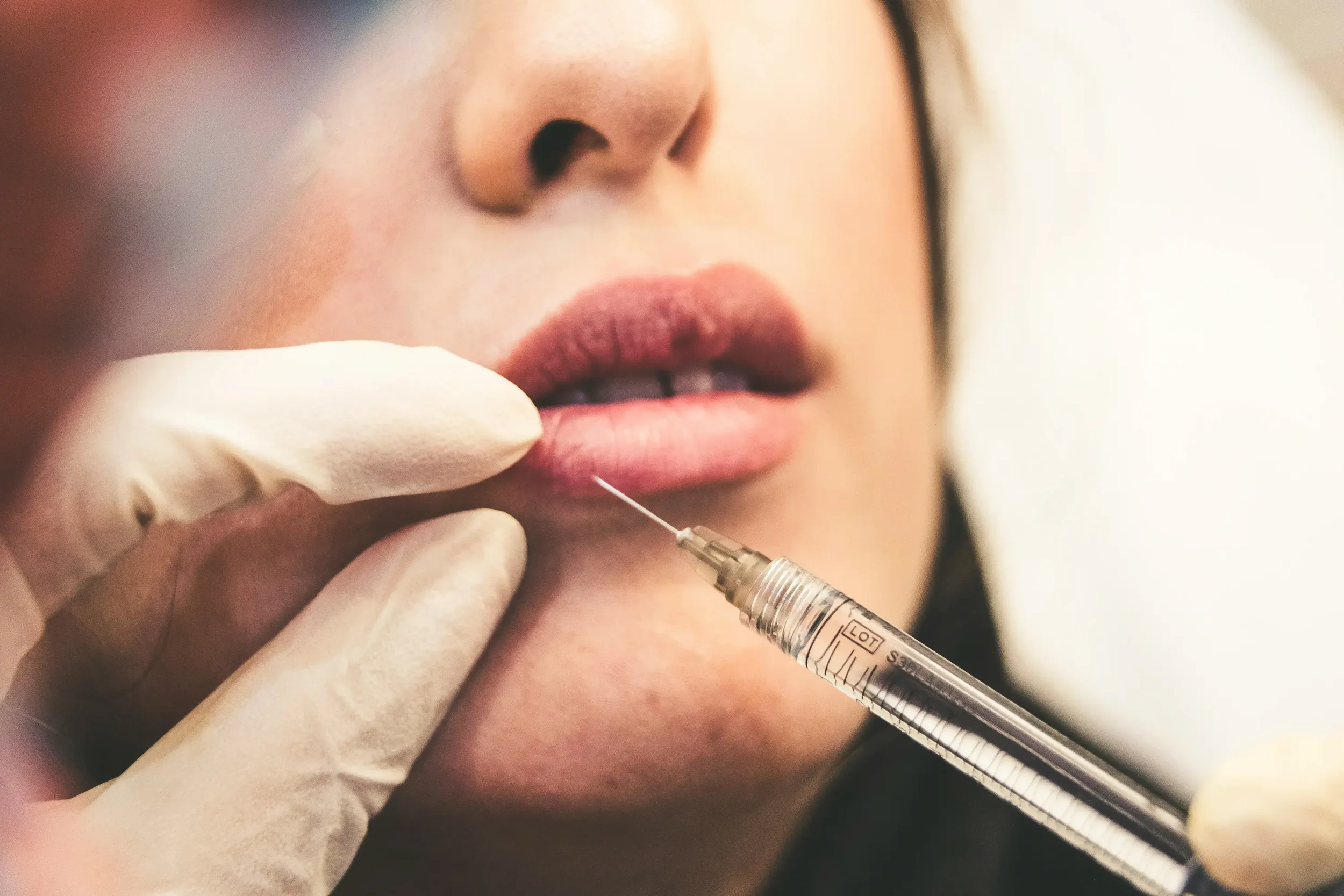
Combining Botox and Fillers
Some people have both kinds of concern: expression lines in the upper face and volume loss lower down. Others need only one treatment, and some need neither.
When both make sense for your goals, a common plan pairs Botox for the forehead, frown lines and crow's feet with filler in the cheeks, folds or lips, sometimes in the same appointment. Book a consultation to have your injector work out which areas, if any, call for which treatment, and in what order.
Results, Downtime, and Upkeep
Many people return to their usual routine soon after either treatment. The first few days feel different, though, and so does how often you will be back.
After Botox
Expect small bumps at the injection points that usually fade within minutes, and possibly a small bruise. Avoid rubbing or massaging the treated areas, and follow your injector's aftercare instructions. Results build over the first two weeks and wear off gradually, so most people return every three to four months.
After Fillers
Swelling and bruising are more common, especially in the lips, and can last anywhere from a few days to a couple of weeks. The shape you see on day one includes some swelling, so judge the final look once it has gone down. A lump that doesn't fade should be checked by your injector. Depending on the product and area, touch-ups usually come every six to eighteen months, and some products last longer.
Before either treatment, tell your provider about every medicine and supplement you take and follow their advice on what, if anything, to pause. Don't stop a prescribed medication without speaking to the clinician who prescribed it.
Concerns That Need a Skin Treatment Instead
Some concerns sit in the skin itself rather than in the muscle or the volume beneath it. Pigmentation, rough texture and many fine surface lines usually call for a different kind of treatment. Acne scars vary: some indented scars improve with filler, while others respond better to resurfacing.
Texture and Tone
Chemical peels remove damaged outer layers so smoother, more even skin comes through. For deeper sun damage, fine lines and scarring, laser resurfacing works further down and prompts new collagen as the skin heals.
Dull or Tired Skin
If your skin mostly looks tired or congested, skin rejuvenation and facial cleans, exfoliates and hydrates with little or no downtime.
Any of these can be done on its own or alongside Botox or filler, depending on what you want to change.

Safety and Choosing Your Injector
Both treatments have long safety records in trained hands. Most side effects are minor, but the rare serious ones are the reason the person holding the syringe matters more than the price.
Botox Risks
Bruising, a mild headache or tenderness are the usual complaints. If the product affects a nearby muscle, a brow or eyelid can droop for a few weeks until it wears off. Rarely, people have an allergic reaction or trouble swallowing, speaking or breathing, and those symptoms need immediate medical attention. For perspective, the prescribing information reports no confirmed serious cases of the toxin spreading through the body at recommended cosmetic doses.
Filler Risks
Swelling, bruising and small lumps are common, and most fade. A lump that lasts should be seen by your injector. The serious risk is filler blocking blood flow in a vessel. It is rare, but it can cause skin tissue to die and, in rarer cases, blindness or stroke. An injector who knows facial anatomy lowers that risk without removing it, and a dissolving agent cannot reverse every complication.
Get medical help right away if you notice unusual pain, skin turning white, grey or blue, or any change in your vision during or after filler treatment.
What to Ask Before You Book
Check that your injector is a licensed medical provider, such as a physician, nurse practitioner or physician assistant, with specific injectable training. Ask which product they plan to use and whether it is FDA-approved for the area being treated, and look at their own before-and-after photos. If you are pregnant or breastfeeding, wait, since safety has not been established for either treatment.
