


Dermal filler is not one product. In the US, there are four main types of dermal fillers: hyaluronic acid, calcium hydroxylapatite, poly-L-lactic acid, and polymethylmethacrylate (PMMA). Each one behaves differently under the skin, which is why the gel used for soft, mobile lips is rarely the one used to sharpen a jawline.
Hyaluronic acid covers most areas of the face because it comes in many textures and can be dissolved if needed. The other three are used more selectively, mostly for deep folds, structure, or slow collagen building. Knowing how each type works makes it much easier to understand what an injector recommends for your face, and why.
How Dermal Fillers Work
Fillers are gels injected beneath the skin to replace volume the face loses with age, or to add shape where there was little to begin with. They do this in one of two ways.
Most fillers are volumizers. The gel itself takes up space, so the change is visible as soon as treatment ends. Others are biostimulators, which prompt the skin to make new collagen over several weeks. Their results build slowly and fade slowly. Calcium hydroxylapatite sits between the two, giving some lift right away and stimulating collagen afterward.
In practice, a volumizer suits someone who wants a defined change in one spot, such as fuller lips. A biostimulator suits gradual, all-over volume loss in someone comfortable waiting a few months for the change to build.
The Main Types of Dermal Fillers
The American Society of Plastic Surgeons groups fillers by the material they are made from. Four materials account for the fillers you are most likely to be offered in the US, though their uses overlap in places.
Hyaluronic Acid Fillers (Juvéderm, Restylane, RHA)
Hyaluronic acid is a sugar your body already makes to hold water in the skin. Filler versions are cross-linked so the gel lasts months instead of days. Juvéderm, Restylane, RHA, Belotero, and Revanesse are all HA fillers.
Within each brand, products range from thin, flexible gels to dense, lifting ones, which is why HA works almost anywhere on the face. Results show immediately and typically last six months to two years, depending on the product and the area. It is also the only one of the four that an enzyme called hyaluronidase can break down, although dissolving filler is a treatment with its own risks rather than a simple reset.
Calcium Hydroxylapatite (Radiesse)
Radiesse is the CaHA filler. It suspends microscopic mineral particles, similar to a compound found in bone, in a gel carrier. The gel gives instant lift, and the particles then encourage collagen growth around them.
CaHA is thicker than most HA gels, so it goes deep: smile lines, marionette lines, and the jawline. Radiesse (+) was the first injectable FDA-approved to improve jawline contour. It is not used in the lips, where its maker notes safety has not been established, and it cannot be dissolved the way HA can.
Poly-L-Lactic Acid (Sculptra)
Sculptra is made from poly-L-lactic acid, the same material used in dissolvable stitches. It is a pure biostimulator. Any fullness right after treatment comes mostly from swelling and the water the product is mixed with, and it settles within days. The lasting change comes as the skin builds collagen over the following weeks, so most people need a series of sessions spaced weeks apart.
Because it restores volume across wide areas, PLLA suits hollow cheeks and a generally thinner-looking face rather than a single feature. In 2023 it gained FDA approval for fine lines and wrinkles in the cheek area. Results can last up to two years and fade gradually. Unlike HA, though, PLLA cannot be dissolved with an enzyme if you change your mind.
PMMA Fillers (Bellafill)
PMMA fillers, sold in the US as Bellafill, combine tiny acrylic beads with a bovine collagen gel. The collagen fills right away, and the beads stay behind permanently to support the skin. Bellafill is approved for deep smile lines and certain acne scars on the cheeks. Because it contains bovine collagen, its label requires an allergy skin test before the first treatment, and anyone who reacts to it cannot be treated.
Permanence is the trade-off. A PMMA result cannot be dissolved, and the FDA notes that removing permanent filler can be difficult or impossible, so it suits a narrow set of cases.
Which Filler Is Used for Each Facial Area
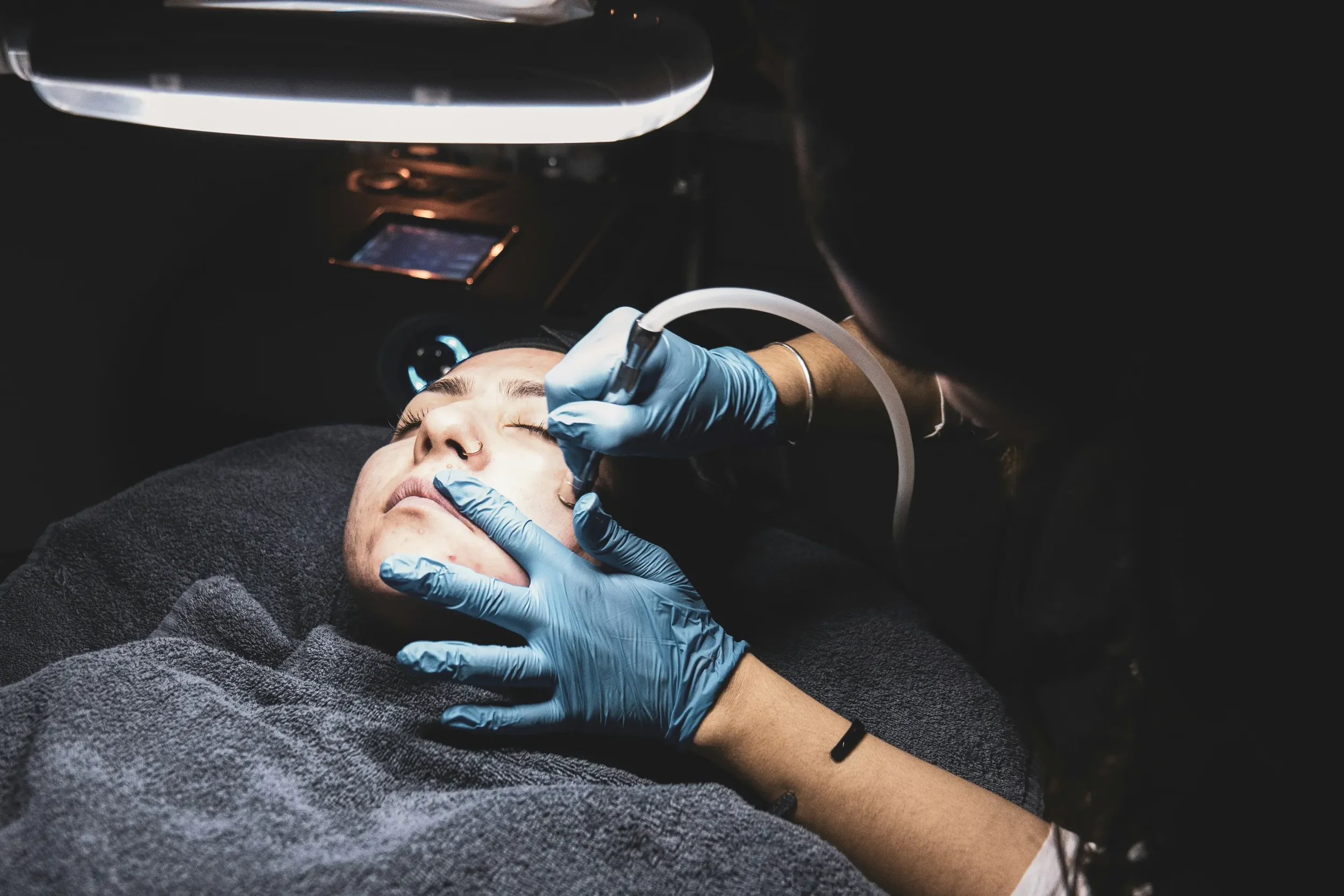
Skin under the eyes is far thinner than skin along the jaw, and the lips move constantly while the chin barely moves. Those differences shape which product an injector reaches for. The table shows common patterns, not fixed rules, and the products listed are examples rather than a complete list.
| Facial area | What the area needs | Filler type often chosen | US products approved for this area (examples) |
|---|---|---|---|
| Lips | Softness and movement | Soft, flexible HA | Juvéderm Ultra XC, Juvéderm Volbella XC, Restylane Kysse, Restylane Silk |
| Cheeks and midface | Lift and projection | Firmer HA; PLLA for broad volume loss | Juvéderm Voluma XC, Restylane Contour, Restylane Lyft, Sculptra (cheek wrinkles) |
| Under-eyes | Smooth contour with minimal swelling | HA products made for this thin-skinned area | Juvéderm Volbella XC, Restylane Eyelight, Belotero Balance (+) |
| Smile and marionette lines | Support for deep folds | Medium to firm HA or CaHA; PMMA for smile lines | Juvéderm Vollure XC, Juvéderm Ultra Plus XC, RHA collection, Radiesse, Bellafill (smile lines) |
| Chin | Structure and projection | Firmer HA | Juvéderm Voluma XC, Restylane Defyne |
| Jawline | Definition along the jaw | High-lift HA or CaHA | Juvéderm Volux XC, Radiesse (+) |
| Temples | Smooth contour from brow to cheekbone | Firmer HA; PLLA in some cases | Juvéderm Voluma XC |
| Fine lines around the mouth | Light smoothing | Thin HA | Juvéderm Volbella XC, Restylane Kysse, Restylane Silk |
Lip Filler
Lips need a filler that bends and stretches with every word and smile, so injectors generally choose soft, flexible HA gels. Lips also swell more than most areas in the first few days, so the final shape is easier to judge once that settles.
Cheek Filler
The cheeks are often the first area to flatten with age, and that loss pulls the lower face down with it. Firm HA placed deep, close to the bone, restores the lift. When volume loss is spread across the whole midface, a biostimulator like Sculptra rebuilds fullness more gradually.
Under-Eye Filler
The skin below the eyes is among the thinnest on the face, which makes this area less forgiving than most. FDA-approved options for under-eye hollows include Juvéderm Volbella XC, Restylane Eyelight, and Belotero Balance (+). They are not identical in texture; Galderma describes Eyelight as a firm, supportive gel that resists absorbing water, so the right choice depends on the person's skin and anatomy. Filler placed too close to the surface can leave a bluish tint known as the Tyndall effect, which is one reason technique matters here as much as product.
Smile Lines and Marionette Lines
The folds from nose to mouth and from mouth to chin are deep creases rather than fine lines, so they need a filler with more body. Medium to firm HA and Radiesse are used for both, while Bellafill's approval covers smile lines specifically. Often, though, the better fix is higher up: restoring lost cheek volume can soften these folds without filling them directly.
Chin Filler
A small or receding chin can make the nose look larger and the jawline softer. Firm, cohesive HA placed against the bone adds projection that holds its shape. Juvéderm Voluma XC and Restylane Defyne both carry FDA approval for chin augmentation.
Jawline Filler
Jawline products are among the most structural fillers available. Juvéderm Volux XC is the first HA filler approved for jawline definition, and Radiesse (+) offers a CaHA option for the same goal. Depending on the product and the person's anatomy, they are placed under the skin, at the level of the bone, or both, to sharpen the line between the face and neck.
Temple Filler
Hollow temples are easy to miss but can make the whole face look tired. In 2024, Juvéderm Voluma XC became the first HA filler approved for temple hollowing, with results lasting up to 13 months. Restoring the temples smooths the transition from forehead to cheekbone.
Fine Lines Around the Mouth
Vertical lines above the lip sit in very thin skin and move with every expression. Thin HA gels are threaded just beneath the surface to soften them without adding visible bulk.
How Injectors Choose the Right Filler
Two people asking for "cheek filler" can leave with different products. The decision rests on how a gel behaves, where it will sit, and what is actually causing the concern.
Firmness and Flexibility
Injectors describe a gel's firmness with a measure called G prime (G'). A higher-G' gel resists pressure and lifts tissue, so it is often chosen for structural areas such as the chin and jaw. A lower-G' gel spreads and moves more easily, which tends to suit the lips and fine lines. Cohesivity, or how well the gel holds together, affects how it sits in tissue. These properties guide the choice, but injectors weigh them alongside anatomy and technique rather than following a fixed rule.
Depth of Placement
The same product can behave differently at different depths. Structural fillers usually go deep, either into the tissue beneath the skin or just above the bone, where they act like scaffolding. Lighter gels sit higher in the skin, where they smooth the surface. Skin thickness shapes this choice too, since thin skin shows any product placed too shallow.
Filler or a Different Treatment?
A line is not always a volume problem. Creases that appear only when you frown or squint come from muscle movement and respond better to a neuromodulator such as Botox. Loose, sagging skin may need skin tightening or surgery rather than more volume. In those cases, filler may not be the right treatment at all.
Read More : Botox or Fillers? Matching the Treatment to Your Facial Concern
Your Goals and Preferences
Personal preferences carry weight. A first-time patient may value reversibility above everything else. Someone who wants fewer appointments may prefer a longer-lasting product, and a person uneasy about sudden change may find a biostimulator's gradual build easier to live with.
Dermal Filler Side Effects and Safety
Fillers have a strong safety record when a trained medical provider injects them, but they are still a medical procedure. Most reactions are short-lived, but a few need prompt medical care.
Common Side Effects
Redness, swelling, tenderness, bruising, and small lumps at the injection sites are the usual reactions. In the clinical study for Juvéderm Volux XC, most of these settled on their own within two weeks. Lips and under-eyes tend to swell more than firmer areas like the chin.
Less often, side effects show up weeks, months, or even years after treatment, according to the FDA, and some nodules need treatment of their own. The agency has also reported delayed inflammation near treated areas after an illness, a vaccination, or dental work, and says this inflammation typically responds to treatment or resolves on its own. Any new lump or swelling near a treated area is worth reporting to your injector.
Read More : Dermal Filler Before and After: What Results Can You Expect at Each Stage?
Rare but Serious Risks
The most serious complication happens when filler enters or presses on a blood vessel. Manufacturer safety information warns this can lead to skin damage, vision problems, or stroke in rare cases. Risk is higher in areas dense with vessels, such as between the brows, around the nose, and along the smile lines. Sudden whitening of the skin, unusual pain, or any change in vision during or after treatment needs immediate attention.
This is why injector training and anatomical knowledge matter so much. For several newer indications, including Volbella XC under the eyes, Voluma XC in the temples, and Radiesse (+) along the jaw, manufacturers provide indication-specific training that providers must complete before using the product in that area.
Who Should Delay or Avoid Fillers
Treatment is usually postponed while there is an active skin infection or cold sore in the area. Fillers have not been studied in pregnancy or breastfeeding, so injectors generally wait until afterward. Other conditions are listed on product labels as reasons not to treat at all, such as a history of severe allergies or anaphylaxis, and for some products an allergy to lidocaine or a bleeding disorder. Each label sets its own list, which is why a full medical history comes before any injection.
Finding the Right Filler for Your Face
The best filler is the one matched to your anatomy, your skin, and the result you want. A soft HA gel that works well in the lips may be the wrong choice for the jaw, and broad volume loss in the cheeks may respond better to a biostimulator than to HA placed in one spot.
If you are in the Clifton Park area and want to know which type suits your goals, you can book a consultation at Iridium Aesthetics, where board-certified nurse practitioner Romana Amjad, MS, NP-BC, will assess your face before recommending any treatment. The practice offers dermal filler treatment with products from the Juvéderm, Restylane, RHA, and Belotero Balance collections, and its injectables menu also includes neuromodulators and biostimulatory injectables.
