

Chemical Peel Treatment in Clifton Park, NY
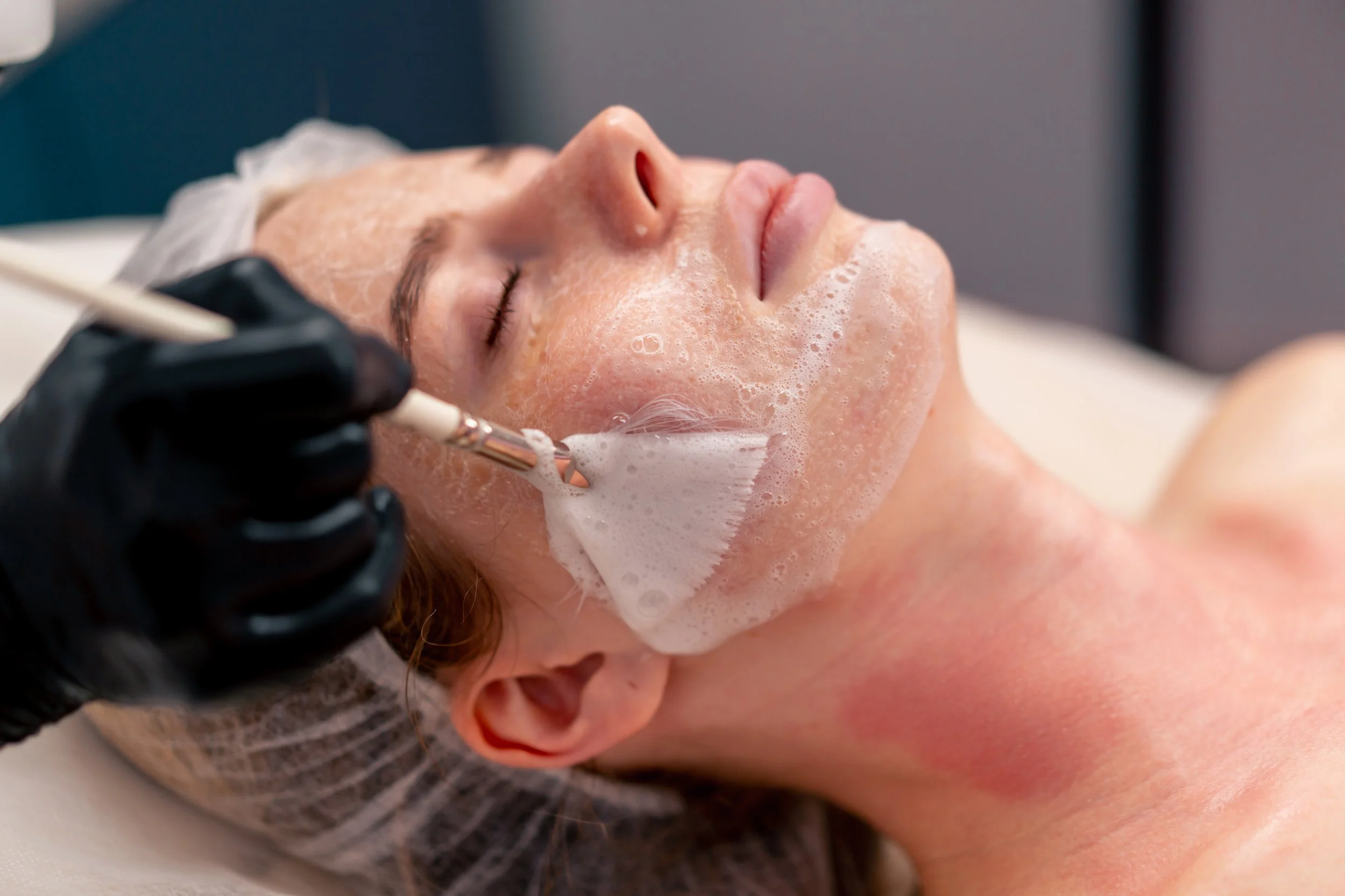
Peels have a season and in Upstate New York it starts around October. Fresh skin burns easily, so the months with the least sun are the safest months to resurface. That is why peel series across the Capital Region run through winter and taper off by May.
A chemical peel removes damaged surface skin on purpose so what grows back is smoother and more even. It is the most direct treatment for sun damage and acne marks. At Iridium Aesthetics in Clifton Park, peel depth and formula are selected by Romana Amjad (MS, NP-BC) at a consultation before your first peel.
A controlled injury and what grows back
A peel is a controlled chemical injury. An acid solution is applied for a set number of minutes, it breaks the bonds holding dead cells together, and the damaged layer separates and sheds over the following days.
Your skin then repairs itself, and the repair is where the result comes from. New cells arrive without the pigment clusters and irregularity of the ones they replace, and the healing response stimulates collagen underneath.
Depth determines everything. A light peel reaches only the epidermis and needs repeating. A medium peel reaches the upper dermis, does more in one session, and asks for a week of your life in return. Deep phenol peels belong in a surgical setting.
Which skin problems respond to a peel
Peels work on the surface and just below it, so they suit pigment and texture problems rather than volume or muscle ones.
Acne, acne marks, and rough texture
Salicylic acid is oil-soluble. That means it gets inside a pore rather than sitting on top of it. It makes salicylic peels the standard choice for active breakouts and blackheads.
The flat brown or red marks left after a spot clears are pigment, not scarring, and they respond well to a series. Indented scarring is a different problem and needs microneedling or laser. Rough texture usually improves within two or three sessions, since it mostly retains dead cells.
Sun damage, uneven tone, and fine lines
Capital Region summers do more damage than people credit, and it surfaces years later as freckling and blotchy patches across the cheeks and nose. Peels lift that pigment gradually over a series.
Fine lines soften as collagen rebuilds, which takes months rather than days. Lines caused by muscle movement will not respond, and those need Botox.
Choosing the acid for the concern
Formula matters as much as strength and the acid is matched to the concern.
Glycolic has the smallest molecule. It penetrates efficiently, which suits dull and uneven tones. Lactic acid is gentler and hydrating, a sensible choice for a first peel. Mandelic acid enters the skin more slowly and that slower entry lowers the risk of pigment rebound in deeper skin tones. For oil and congestion, the one you want is salicylic acid.
Medium-depth work usually means TCA, on its own or in a branded blend such as a Jessner's solution. These do considerably more in one session and involve visible peeling for five to seven days.
Your peel appointment and when to postpone
A first peel is deliberately weaker than what your skin could handle and the consultation is where that gets decided. Romana assesses your skin type, pigment history and what you have used recently, then starts conservatively. A first peel is deliberately milder than what your skin could probably handle.
Some things rule out treatment for now. Active cold sores, broken skin or sunburn mean rescheduling, and isotretinoin requires a six-month gap. Stop retinoids and acids a week beforehand and skip waxing. If you get cold sores, antivirals are prescribed in advance.
The treatment itself is quick. Skin is cleansed and degreased, the solution goes on in layers, and you feel warmth and stinging that peaks within a couple of minutes. A fan helps. The appointment runs about thirty minutes.
Peeling, healing, and how many sessions
The first two days you look slightly flushed and feel tight. Peeling starts around day three and runs one to three days after a light peel, five to seven after a medium one.
Do not pull the flaking skin. Pulling sheets that are not ready is the main cause of scarring and lasting pigmentation.
Don't forget to moisturize the skin and avoid actives for a week. Daily sunscreen, no exceptions. Pigment rebound after a peel is almost always a sun exposure problem.
Brightness shows as soon as shedding finishes. Pigment and texture keep improving over four to six weeks as collagen rebuilds. Light peels work as a series of three to six spaced two to four weeks apart. A medium peel often stands alone or repeats every six to twelve months.
How much a chemical peel costs in Clifton Park, NY
Light peels in New York run $150 to $300 a session. Medium depth TCA peels cost more, somewhere between $400 and $900. The statewide average across all depths sits near $395. That average includes New York City so expect Capital Region pricing toward the lower end.
Series packages come in below the per-session rate, which matters because light peels are meant to be repeated. We'll map out how many you need when you book a consultation. Cosmetic peels are not covered by insurance, including peels done for acne.
Why choose Iridium Aesthetics for chemical peels in Clifton Park, NY
Romana Amjad is a board certified nurse practitioner with training in advanced skin rejuvenation, laser therapy, and regenerative aesthetics. With peels, that breadth matters most for knowing when not to peel. Indented scarring and deep static lines have better answers, and you will be told so.
We treat all skin types and tones, and peel selection changes accordingly rather than one formula being used on everyone.
Frequently Asked Questions
Is winter really the best time for a peel in Upstate New York?
For most people, yes. Peeled skin is more vulnerable to UV and pigment rebound is most likely with sun exposure. Shorter days from October through April make that easier to manage. Summer peels are possible with disciplined sunscreen use.
Are chemical peels safe for darker skin tones?
Yes, with the right formula. Deeper skin tones carry a higher risk of post-inflammatory hyperpigmentation. That's why we favor gentler acids such as mandelic and lactic. We also build depth slowly across a series rather than pushing for results in one session. The risk lies in peeling too aggressively too soon.
How is a chemical peel different from a medical facial?
A medical grade facial exfoliates and hydrates with no real downtime. A peel deliberately removes a layer and trades several days of flaking for a stronger result. Facials maintain, peels correct.
Will I actually peel?
After a light peel, sometimes barely, and that does not mean it failed. Visible shedding tracks depth rather than effectiveness. Medium peels always flake noticeably.
How long before a wedding should I book?
Three to four weeks for a light peel, six for a medium one. Never in the final fortnight, and never as your first peel.
