

Laser Skin Resurfacing in Clifton Park, NY
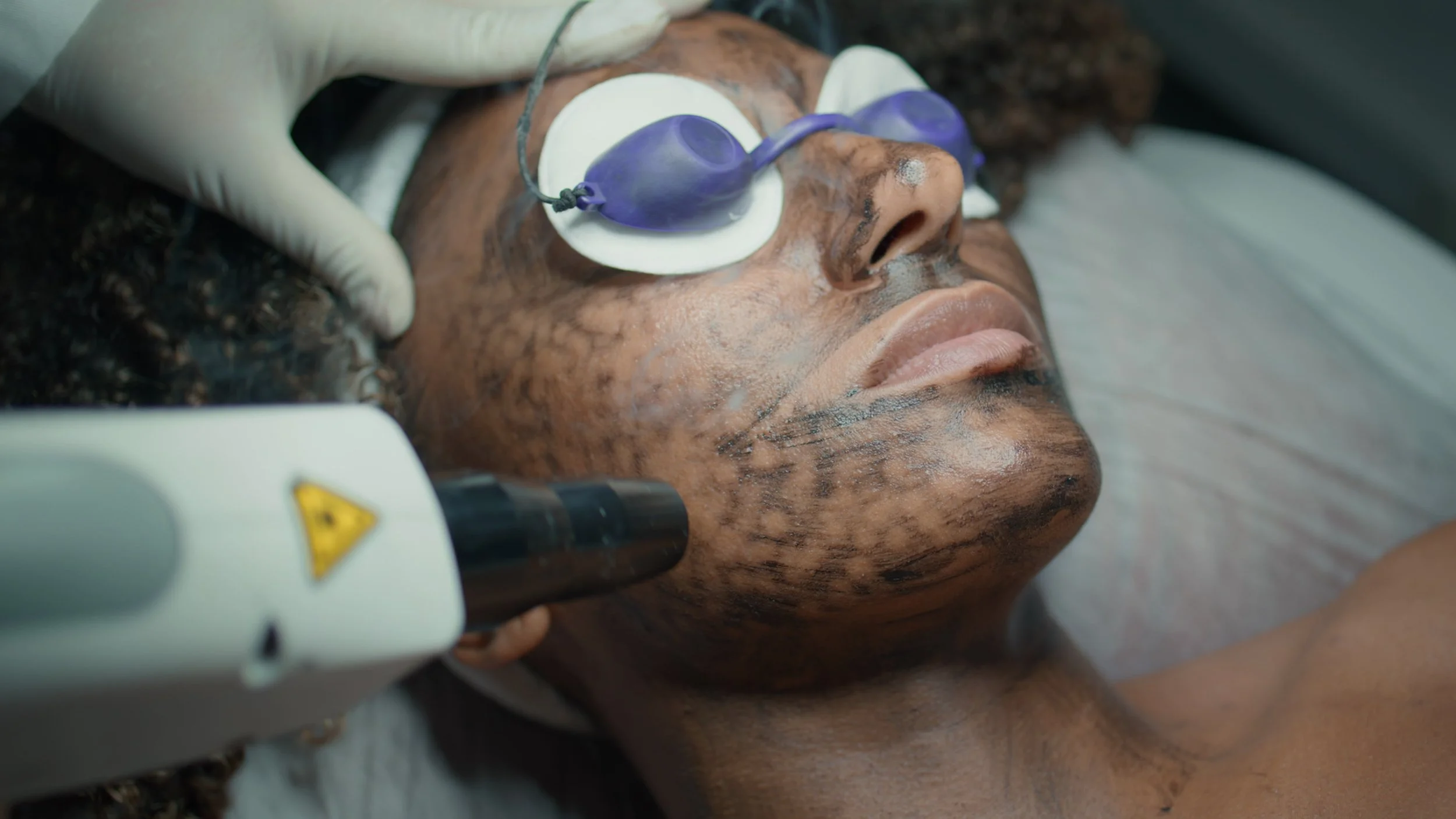
Most people arrive at laser resurfacing after trying everything gentler. Facials keep the skin healthy and peels lift pigment. But neither reaches indented acne scars or texture that exfoliation cannot touch. Neither reaches sun damage either, layered on over decades of Adirondack summers.
Laser resurfacing works at that depth. It uses controlled heat to remove or damage tissue in a precise pattern. Next, it relies on the healing response to rebuild the skin with new collagen underneath. At Iridium Aesthetics, laser depth and settings are chosen by Romana Amjad (MS, NP-BC) once she has assessed your skin.
Thulium, fractional, and what those words mean
Our resurfacing runs on a NOUVADerm platform, a 1927nm thulium fractional laser. Two words there matter.
Thulium is the wavelength and water in the skin absorbs it. That makes it well suited to the epidermis and upper dermis.
Fractional describes the pattern. Instead of treating the whole surface, the laser puts energy into a grid of microscopic columns with untreated skin left between them. Those intact bridges are what let you heal in days rather than weeks. They are also why fractional resurfacing replaced full-surface ablation for most patients.
Each column triggers a repair response. Collagen and elastin rebuild over the coming weeks so the result keeps improving long after the redness
What laser reaches that peels can't
Laser reaches problems that sit deeper than the surface, so it suits scarring and structural texture rather than dehydration or muscle movement.
Acne scars and enlarged pores
Indented acne scarring is the concern laser handles better than anything else non-surgical. Peels and facials cannot reach a depressed scar. Fractional columns can, by damaging the fibrous tissue and prompting collagen to fill it.
Rough texture and visible pores respond to the same remodeling, usually over a series rather than a single visit.
Sun damage and pigmentation
Sun damage on the face, chest and hands is common here, and the chest tends to show it first because people protect their faces and forget everything below the collar.
The 1927nm wavelength is particularly effective on surface pigment. Fine lines soften as collagen rebuilds. Deep static wrinkles improve rather than disappear and lines caused by muscle movement need Botox instead.
Choosing your treatment depth
Before the laser comes out, Romana needs to know your pigment history and how much sun you have had recently.
She chose this platform because it runs non ablative, sub ablative, and ablative pulses. Non ablative heats the tissue beneath an intact surface, so downtime is minimal. Ablative removes surface tissue, which does more per session and costs you more recovery
Most treatment plans sit between the two, and the setting can change between visits as your skin proves what it tolerates.
A recent tan is the one that surprises people. Extra pigment competes for the laser's energy, and that raises burn risk. Cold sores, broken skin and isotretinoin within six months also mean waiting.
Numbing cream goes on for thirty to forty-five minutes first. The treatment feels hot and prickly, with cold air used throughout. Expect around thirty minutes for a full face.
Five days of shedding, twelve weeks of collagen
You leave looking sunburned. Redness and heat last a day or two, then the skin turns rough and slightly bronzed as treated columns work to the surface, usually shedding by day five.
Keep it simple while healing. Bland moisturizer, no actives for a week, no gym or sauna for forty-eight hours, and sunscreen daily while the treated columns are still surfacing.
A glow appears in the first week. The real change arrives between four and twelve weeks as collagen forms, so judging the result at day ten is judging it too early. Gentler settings typically need three to five sessions spaced four to six weeks apart. Deeper settings do more per visit and take one to three.
How much laser skin resurfacing costs in Clifton Park, NY
Pricing tracks depth. Non-ablative fractional sessions generally run $400 to $1,200 nationally and they are designed as a series rather than a one-off. Though it usually takes only one or two visits, Ablative resurfacing costs up to $4,500 a session.
New York pricing sits above the national median, by somewhere between fifteen and thirty percent. That gap comes from New York City rather than upstate, so Capital Region rates land below the state figures you will find quoted online.
Packages lower the per-session cost meaningfully on series treatments, which is worth asking about when you book a consultation.
Why choose Iridium Aesthetics for laser resurfacing in Clifton Park. NY
Romana Amjad is a board certified nurse practitioner. With lasers, the operator matters more than the device because the same platform can produce a beautiful result or a burn depending on the settings.
She also treats with injectables, peels and microneedling so the recommendation is not shaped by owning one machine. Some scarring responds better to microneedling and some pigmentation should be treated topically first.
Frequently Asked Questions
Is laser resurfacing safe for darker skin tones?
Yes, with appropriate settings. The platform is rated for all Fitzpatrick skin types, and the 1927nm wavelength targets water rather than melanin. That is what makes it safer for deeper tones than older pigment-seeking lasers. Romana still builds depth gradually, since the risk of post-inflammatory hyperpigmentation rises the harder you push.
When is the best time of year for laser resurfacing in Upstate New York?
Autumn through early spring. Healing skin is vulnerable to UV, and the practical problem here is scheduling around visible redness rather than the weather itself. Booking between October and April avoids lake weekends and outdoor plans while your skin is still pink.
How is this different from a chemical peel or a medical facial?
Depth and mechanism. Medical facial exfoliates and hydrates while chemical peel removes a surface layer chemically. Laser works in columns that reach the dermis, which is why it treats scarring the other two cannot.
Does it hurt?
With numbing cream, most patients describe heat and prickling rather than pain. Deeper settings are more uncomfortable and shorter.
Can I have laser and injectables together?
Not in the same session. We schedule laser first and injectables two weeks later, or inject first and laser two weeks after, so heat is not applied over settling product.
