

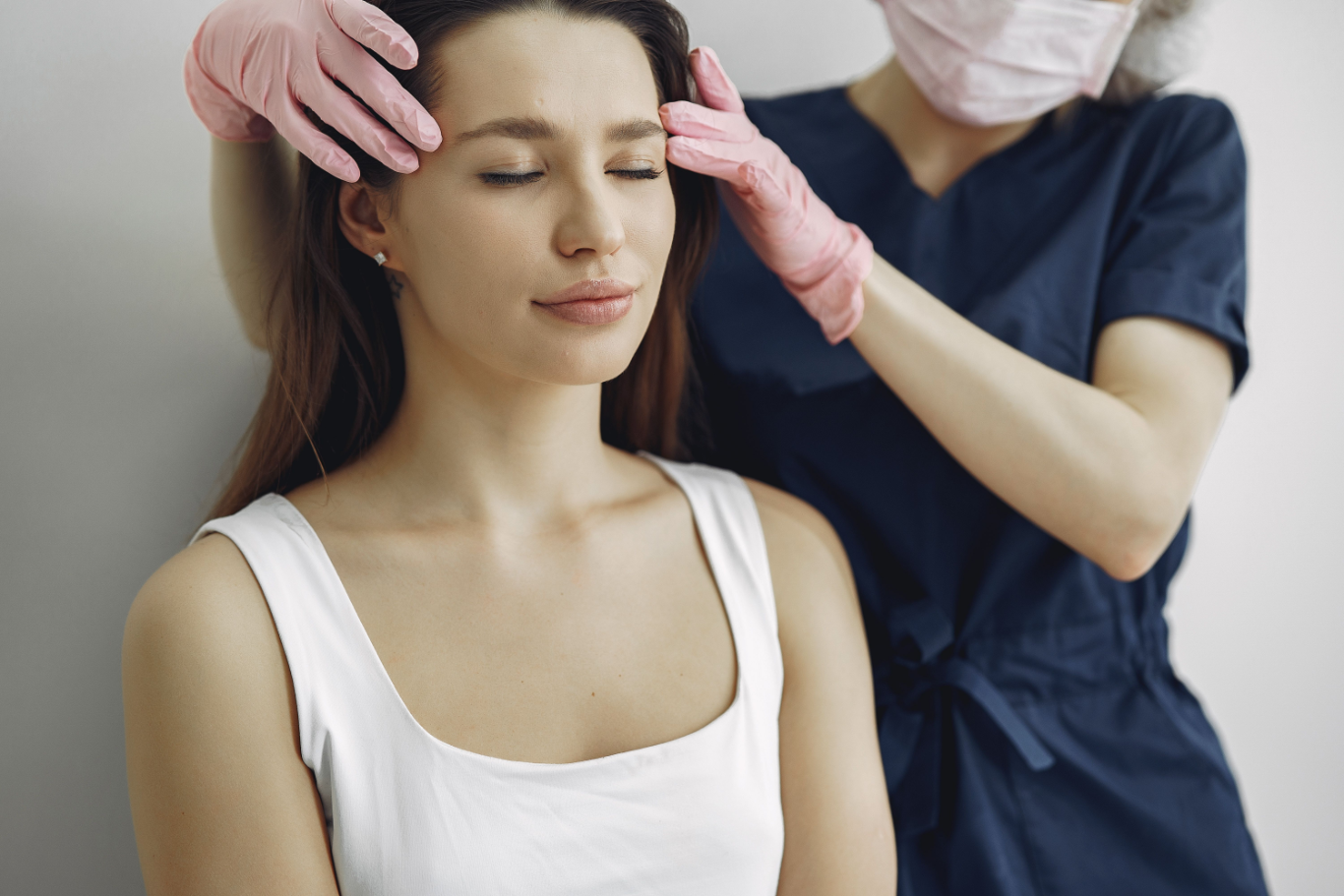
Lift your eyebrows in the mirror and watch the skin above them. It folds into a set of horizontal pleats, and in your twenties those pleats let go the moment your brows come back down. Somewhere in your thirties or forties, a few of them stop letting go. Foundation settles into them by noon, and overhead lighting picks them out in photos.
Neuromodulators such as Botox made up half of all minimally invasive procedures in the American Society of Plastic Surgeons' 2025 statistics report. Botox for forehead lines is one of the treatments injectors approach most carefully. One muscle does all the work of lifting your brows, so where the product goes and how much of it goes there decide whether you look rested or look like your brows got heavier overnight.
At The Iridium Aesthetics in Clifton Park, Romana Amjad, MS, NP-BC, watches how your forehead moves before she picks a dose, and you can book a consultation to have that assessment done before you commit to a single unit.
What Causes Horizontal Forehead Lines
Forehead lines are fold marks. Each time the frontalis muscle contracts, it pulls the brows up and creases the skin above them, and it does this all day, every time you talk or react to something. How the lines behave tells you a lot about how well Botox will treat them.
Lines that show only with movement
In the early stage, the lines appear when your brows lift and disappear when they relax. These are dynamic lines. The cause is still purely muscular, which is why they tend to respond best.
Lines that stay when your face is still
Collagen thins with age and sun exposure adds up, so the skin slowly loses its ability to smooth itself out after each fold. Eventually the crease becomes part of the surface. These static lines still improve once the muscle beneath them relaxes, but one session rarely clears them.
Lines from lifting heavy eyelids
This group catches people off guard. Some foreheads are lined because the frontalis has been quietly propping up low brows or loose upper-eyelid skin for years, usually without the person noticing. When forehead Botox relaxes that muscle, the lids can suddenly look heavier, even though the extra skin was there all along, held up by the forehead. An injector who checks for this before treatment can plan around it, and it is part of why forehead doses vary from person to person.
How Botox Works on Forehead Lines
Botox is a purified form of botulinum toxin type A. In very small amounts, it blocks acetylcholine, the chemical signal a nerve sends to tell a muscle to contract. The treated part of the frontalis goes quiet, the skin above it stops folding, and the line gets a chance to soften. The nerve endings gradually regrow their connections, which is why the effect wears off.
Why your frown lines may be treated too
The FDA label for Botox Cosmetic does not treat the forehead as a stand-alone area. It calls for 20 units across five forehead points given alongside 20 units in the frown lines between the brows, for 40 units in total, and the prescribing information says the pairing is there to lower the risk of the brows dropping. The reasoning comes down to balance. The frontalis lifts the brows, while the muscles between and around them pull them down. Relax only the lifter and the muscles pulling down have nothing working against them.
Experienced injectors adjust these numbers to the face in front of them, but they still plan the forehead and the frown lines together.
Neurotoxins approved for forehead lines
Two products carry an FDA approval for forehead lines. Botox Cosmetic received it in 2017. Xeomin added forehead lines and crow's feet to its frown-line approval in July 2024, with a recommended forehead dose of 20 units. Dysport and Jeuveau are approved for frown lines, and injectors sometimes use them on the forehead off label. The Iridium Aesthetics offers all four on its treatment menu, so the product decision rests on your history with neurotoxins and how your muscles have responded before.
How many units a forehead usually takes
Most forehead treatments use somewhere between 10 and 20 units of Botox. Men often need more, since their frontalis tends to be larger and stronger. A wide forehead needs more injection points than a short one, though not always more product. Units also do not carry over between brands. The Botox Cosmetic label states that its units cannot be compared to or converted into units of any other botulinum toxin, so 20 units of Botox and 20 units of Dysport are not the same treatment.
Botox Forehead Results Timeline
Results build over about two weeks, then fade slowly over the following months.
| Time after treatment | What you'll notice |
|---|---|
| Same day | Small bumps at the injection points that flatten within the hour, with no change in movement yet |
| Days 2 to 5 | Lifting your brows takes more effort, and the lines look softer when you do |
| Days 10 to 14 | Full effect, the right moment for a follow-up visit |
| Months 3 to 4 | Movement returns gradually, and the lines start to reappear |
The first two weeks
Nothing happens on day one, and that is normal. Most injectors ask you to stay upright for about four hours and skip the gym until the next day so the product stays where it was placed. The first softening usually shows up between day two and day five.
By day ten to fourteen, the toxin has reached its full effect. This is also when the shape of your brows settles, so a two-week review is the first point at which an injector can see the final result and correct anything uneven. Many people say their forehead feels tight or heavy during this stretch. That sensation usually fades as you get used to a quieter muscle.
How long forehead Botox lasts
The label gives about three to four months for frown lines and does not list a separate figure for the forehead, which in practice tends to wear off on a similar schedule. Movement comes back gradually rather than all at once, so most people notice their lines returning a few weeks before they feel fully "worn off." Lighter doses often wear off sooner, which matters because so many people now ask for a light forehead. If you prefer to keep some lift in your brows, plan on a refresh closer to the three-month mark.
What Forehead Botox Before and After Photos Show
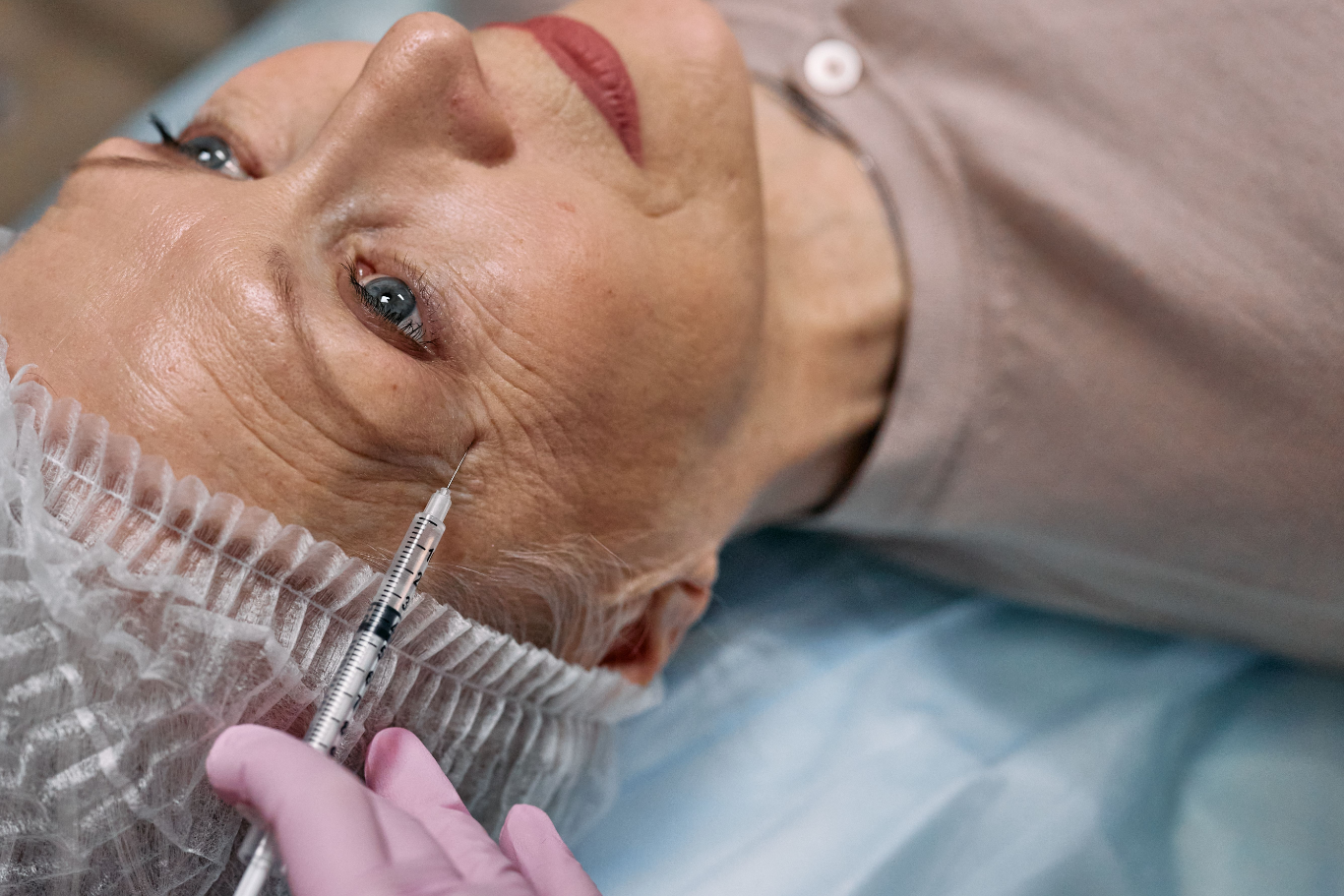
Most before-and-after photos online show the brows raised as high as they can go, which is the hardest possible test. Lines that move and lines that stay at rest also respond very differently.
Results on lines that move
In one of the two phase 3 trials behind the forehead approval, 45.6% of people given 40 units (20 in the forehead and 20 between the brows) improved by at least two grades on the study's wrinkle scale at day 30, compared with 0.6% on placebo. The second trial reported 61.4% against 0%. Two grades is a demanding bar, roughly the difference between severe lines and mild ones, and both the investigator and the patient had to agree on it. People who improved by a single grade did not count toward those numbers.
Results on etched lines
Lines that show at rest soften, but they often need two or three rounds of Botox before they fade as far as they will go. The groove itself is a skin problem as much as a muscle problem, so pairing Botox with collagen-building laser treatments or microneedling can do more than either one alone. If you are unsure whether a crease calls for a neurotoxin at all, the practice's guide to botox or fillers breaks it down by concern.
Shiny forehead after Botox
Forums are full of people asking why their forehead looks glossy after Botox. Part of the answer is simple: smoother skin reflects light more evenly. A 2015 study in Aesthetic Surgery Journal also measured lower oil production at forehead injection sites after treatment, with oil levels rising again farther from each injection point. Some people enjoy the less oily forehead. Others find it a little dry and add a lighter moisturizer.
Natural-looking forehead Botox
The look people want has shifted. Fewer patients ask for a forehead that cannot move at all, and more ask for softer dosing that relaxes the deepest lines while leaving enough movement to raise an eyebrow. Beauty writers have taken to calling this "strategic wrinkles." For the forehead, it usually means fewer units placed higher, with the lowest part of the muscle left mostly free to keep the brows up.
Forehead Botox Side Effects and How to Lower Your Risk
In the forehead trials, the most common side effects listed on the label were headache, in 9% of patients, and brow ptosis (dropped brows), in 2%. Eyelid droop also showed up in 2%. Most of the problems people describe online come down to placement and dose.
Heavy or lowered brows
Too much product in the lower forehead, or a standard dose in someone with hooded lids, can leave the brows sitting lower and the upper lids looking heavier. Lighter dosing and injection points kept higher on the forehead lower the risk, and so does treating the frown lines at the same visit. If it does happen, it fades as the toxin wears off, and there is no quick way to reverse it.
The "Spock" brow
This is a peaked, quizzical arch at the outer ends of the brows. It shows up when the center of the forehead is relaxed but the outer fibers of the frontalis are left untreated, so they keep pulling the tails of the brows upward. A unit or two in the outer forehead at the two-week review usually flattens it.
A drooping eyelid
Eyelid droop is different from a heavy brow. It happens when the toxin reaches the small muscle that lifts the upper lid, which is more of a risk with frown-line injections close to the brow. It is temporary. Not rubbing or pressing on the treated area for the rest of the day helps keep the product in place. Trouble swallowing, speaking, or breathing after any neurotoxin injection is different and needs medical care right away.
Counterfeit or mishandled product
In 2024, the CDC investigated harmful reactions in people who received counterfeit Botox, product from unverified sources, or injections from people not following state rules. The final count was 17 people in nine states, New York among them, with symptoms including blurred or double vision, drooping eyelids, and trouble swallowing. The agency's advice was to accept injections only from a licensed, trained provider using product from an authorized supplier.
Who Should Avoid or Delay Forehead Botox
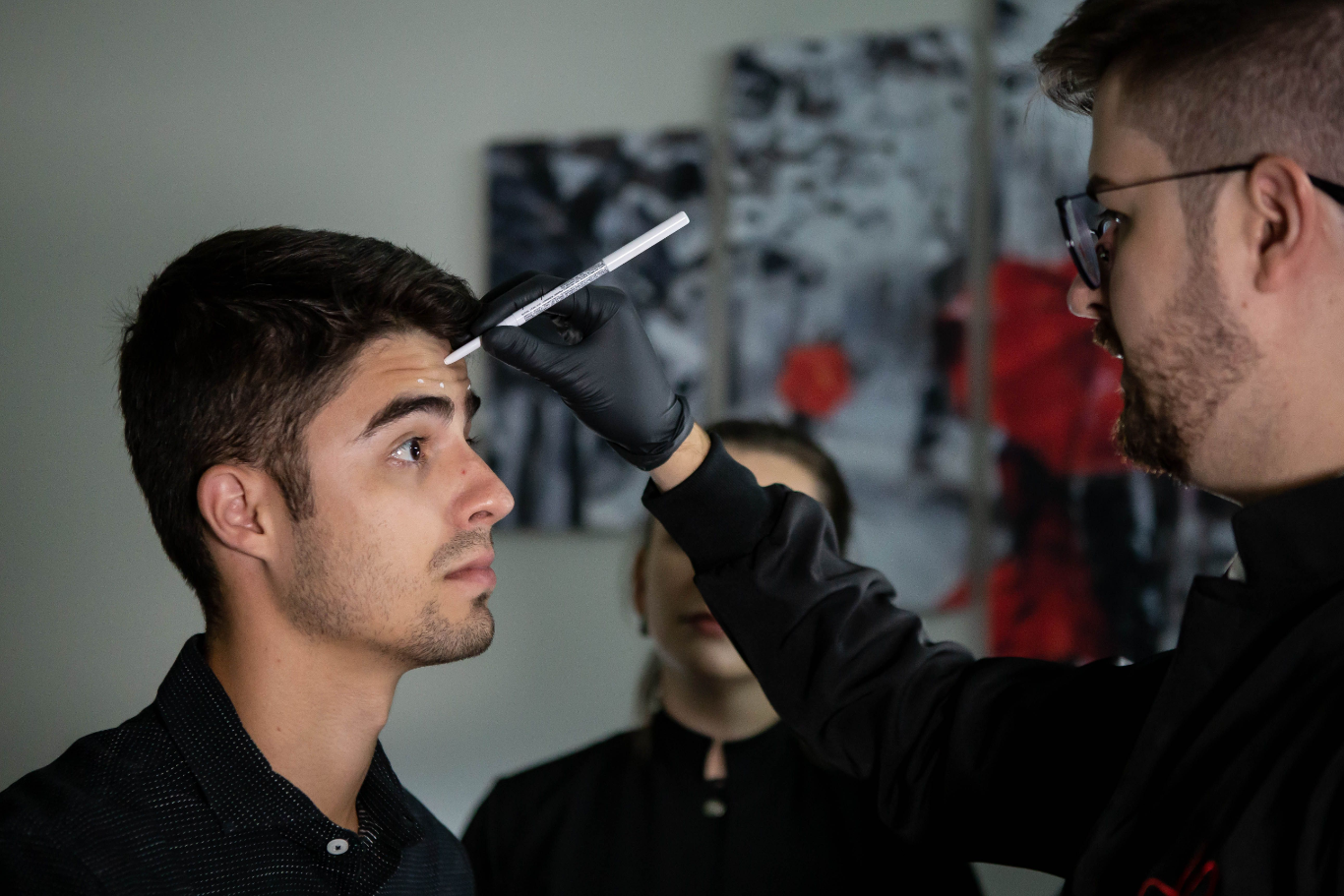
For most healthy adults, forehead Botox is a routine treatment. A few situations call for a conversation first, and some call for waiting.
Hooded lids or low-set brows
This does not rule you out, but it changes the plan. Your injector may use a lighter, higher pattern on the forehead, focus on relaxing the muscles that pull the brows down, or treat only the frown lines this time and see how your brows respond.
Pregnancy and breastfeeding
Botox Cosmetic has not been studied well enough in pregnancy or breastfeeding to be considered safe, and practices routinely postpone cosmetic injections until afterward.
Neuromuscular conditions
The label warns that people with neuromuscular disorders, such as ALS or myasthenia gravis, may be at higher risk of serious effects. If you have one, your injector needs to know before any treatment.
GLP-1 weight loss medications
Many people on GLP-1 drugs have posted online that their Botox seems to fade faster. A 2025 computer-modeling study by a team including Eqram Rahman and Jean Carruthers simulated 25,000 virtual patients and predicted shorter toxin durability in people taking these medications. The modeled groups were migraine and jaw-muscle patients, not forehead patients, and the authors called for real-world studies before anyone changes dosing. If you are on a GLP-1 medication, mention it at your consultation so your treatment interval can be set with that in mind.
Forehead Botox Cost in Clifton Park, NY
Botox is priced per unit, and across the Capital Region that typically means $12 to $16 per unit. At 10 to 20 units, the forehead alone comes to roughly $120 to $320. Because most plans pair it with the frown lines, as the label recommends, a combined visit usually lands closer to 30 to 45 units, or about $360 to $720. Cosmetic Botox is not covered by insurance. The page on botox treatment in Clifton Park covers pricing for the other areas.
Your own total depends on how strong your muscles are and how much movement you want to keep. Romana writes down a unit estimate at your consultation at 1524 US-9, Suite B, before anything is booked, so you can schedule your forehead assessment or call 518-709-4800 knowing the cost up front.
Frequently Asked Questions
Can Botox completely erase deep forehead wrinkles?
Not usually in one session. Botox stops the folding that deepens a line, but a crease already set into the skin needs time and often a few treatment rounds to soften.
Why does my forehead feel heavy after Botox?
A mild tight or heavy feeling in the first week or two is common while you adjust to a quieter frontalis, and it usually eases on its own. Brows that visibly sit lower, or lids that feel like they are pushing down on your eyes, are worth a call to your injector.
Is baby Botox enough for forehead lines?
For fine lines and people who want to keep plenty of movement, often yes. "Baby Botox" simply means smaller doses spread across the forehead. Expect a softer result and a shorter gap before your next appointment.
Can forehead Botox lift my eyebrows?
Treating the forehead on its own tends to lower the brows slightly, because it relaxes the brow-lifting muscle. A brow lift with Botox works the other way, by relaxing the muscles that pull the brows down, mostly around the outer tail of the brow.
How often should I get Botox for forehead lines?
Most people come back every three to four months. Some patients who keep a regular schedule find their lines remain softer between visits, and their injector may adjust the dose over time.
Does starting Botox early prevent forehead lines?
Relaxing the muscle reduces the repeated folding that sets lines into the skin, so regular treatment can slow how quickly they deepen. Long-term research on starting in your twenties is limited, though, and daily sunscreen remains the most proven way to protect forehead skin over time.
